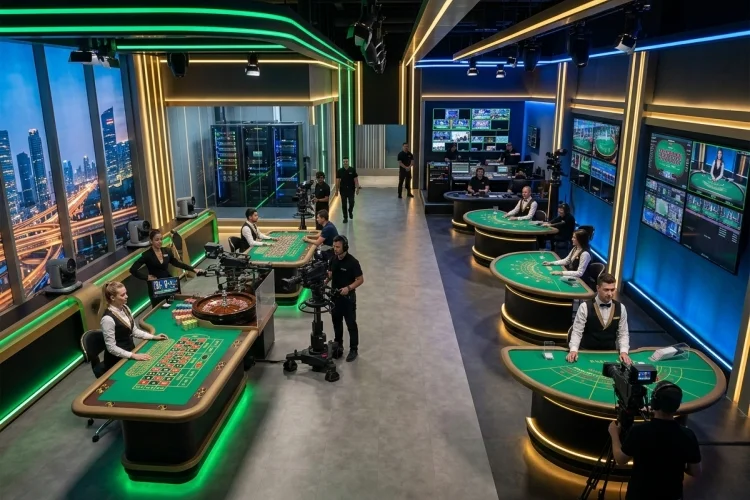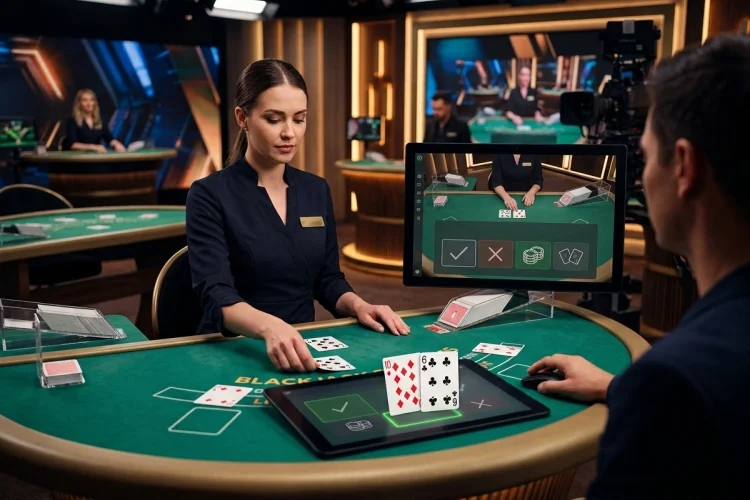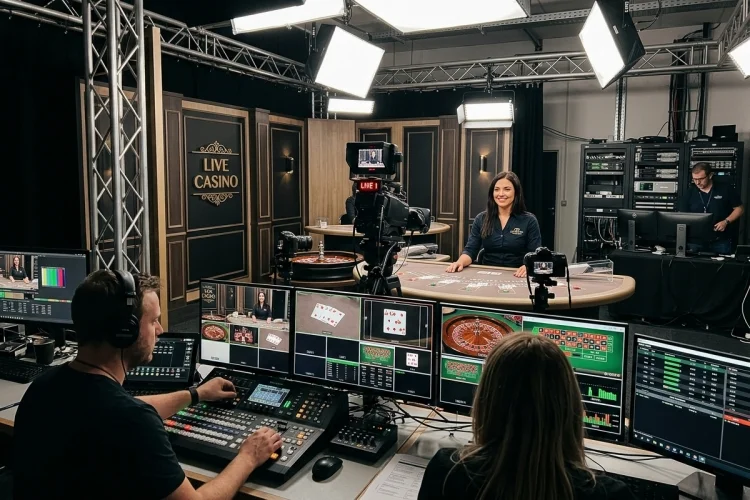
A live casino table may look simple on your screen: a dealer, a stack of cards, a roulette wheel, and a few betting buttons. Behind that view is a production system closer to a small television studio than a traditional online game.
Understanding How Live Casino Studios Produce Real-Time Games means looking at everything happening off camera.
Professional dealers, studio lighting, multiple cameras, streaming infrastructure, betting software, surveillance, and operational teams all need to work together.
Even a small delay between the physical table and digital interface can affect how smoothly a live game feels.
A Live Casino Studio Works Like a Broadcast Facility
Modern live casino studios combine casino equipment with professional broadcasting technology.
Evolution describes its live studios as advanced TV or film-style facilities where casino games and game shows are broadcast in real time. These environments use multiple cameras, audio equipment, lighting, IT systems, and purpose-built sets.
The physical tables may resemble those in a land-based casino, but the surrounding infrastructure is different.
Every action has to reach players through computers and mobile devices while the betting interface remains synchronized with the physical game.
That creates two connected layers: the real table and the digital experience.
Professional Dealers Run the Physical Game
The dealer remains one of the most visible parts of live production.
Depending on the game, dealers shuffle or handle cards, spin roulette wheels, announce results, manage the pace of rounds, and sometimes communicate with players through chat.
Training is more important than simply knowing the rules.
The UK Gambling Commission’s technical standards state that live casino croupiers should receive adequate training and that evidence of both initial and refresher training should be maintained.
Dealers also work within documented procedures to keep rounds consistent.
Because they are appearing on camera, presentation skills matter too. Eye contact, pacing, clear communication, and smooth physical movements contribute to the broadcast experiance.
Multiple Cameras Capture the Table
One webcam is no longer enough for modern live casino production.
Studios may use several cameras to capture wide shots, dealer views, close-ups, cards, roulette wheels, and other important game elements.
Pragmatic Play states that its live casino solution uses multiple 4K-quality cameras alongside professional video, lighting, and audio equipment.
Evolution also describes how live casino technology evolved from basic webcam feeds into multi-camera high-definition production.
The camera feed can change automatically or through production systems depending on what is happening.
A roulette broadcast might focus on the betting layout before moving toward the wheel when the ball is released. Baccarat may use close-ups when cards are revealed.
These angles are not only decorative. They help players follow the game more clearly.
Lighting and Audio Need Studio-Level Control
Casino lighting has a difficult job.
The dealer must look natural on camera, cards must remain readable, reflective chips cannot create excessive glare, and green-screen or chroma-key backgrounds need consistent illumination.
Evolution has discussed how its production teams adapted chroma-key technology specifically for live casino environments, including changing studio design to reduce shadows and uneven colour.
Audio also matters.
Players need to hear announcements without excessive room noise from nearby tables. Microphones, acoustic treatment, and broadcasting systems help isolate the dealer’s voice.
A studio containing many simultaneous tables therefore needs careful physical planning rather than simply placing several games in one large room.
The Betting Interface Connects Players to the Table
Video alone would only allow players to watch.
The digital interface turns the broadcast into an interactive game.
During roulette, for example, software opens a betting window, records player selections, displays available wagers, and closes betting before the physical outcome is completed.
Blackjack adds another layer because players may need digital controls for actions such as hit, stand, double, or split.
Evolution explains that its live-game software allows players to place bets, make game decisions, and communicate with dealers from the same interface used to watch the stream.
This interface must stay closely synchronized with the real table.
If the physical dealer moves ahead while the software still accepts bets, the game could become confusing or unfair.
Low-Latency Streaming Keeps Everything in Sync
Latency is the time between something happening in the studio and appearing on the player’s device.
Reducing that delay is a major challenge because live video needs to be captured, encoded, transmitted, delivered over the internet, and displayed on different devices.
Pragmatic Play says its in-house streaming architecture can provide glass-to-glass latency as low as approximately 1.5–2 seconds under applicable conditions.
That does not mean every player will experience identical delay.
Internet quality, distance from infrastructure, device performance, and network congestion can affect the final result.
Studios therefore need scalable streaming systems capable of handling many users without causing the video and digital game state to drift apart.
Game Results Must Be Recorded Correctly
Once a physical outcome occurs, the digital platform needs the correct result.
In blackjack, that means the correct cards and player decisions must be associated with each round. Roulette requires the final wheel result to be recorded accurately before bets are settled.
The UK Gambling Commission requires reasonable steps to ensure wagers are accepted, processed, and settled according to the published game rules.
Game logs are also important.
Its live dealer standards state that events should be recorded and collated into statistics that can be analysed for game, staff, and operational trends.
The production system is therefore not merely transmitting video. It is also creating a detailed digital record of each round.
Surveillance Continues Behind the Broadcast
Players see the entertainment layer. Supervisors see much more.
Regulatory standards can require surveillance covering dealer activity in enough detail to confirm that procedures and game rules were followed. Equipment and secure areas should also be protected from unauthorised access.
This creates another camera environment running behind the public stream.
Operational staff may monitor dealers, equipment, tables, unusual activity, and system alerts.
Pragmatic Play describes a back-end platform that can provide operators with table controls, reporting, and operational or fraud-related notifications.
The polished game on screen is therefore supported by a much larger operational structure.
What Happens if the Technology Fails?
Live streaming depends on networks, software, cameras, and servers, so failures are possible.
Regulated systems need procedures for technical interruptions.
The UK Gambling Commission says systems should be capable of responding to interruptions, which can include restoring game information or voiding wagers where appropriate.
Providers also build redundancy into their production infrastructure.
Pragmatic Play describes fail-safe technology designed to minimise downtime in its live casino operation.
This is especially important when studios operate continously across multiple markets and time zones.
A professional production workflow therefore includes planning for what happens when something goes wrong, not only when everything works perfectly.
How Live Casino Studios Produce Real-Time Games comes down to combining physical casino procedures with professional broadcasting and digital infrastructure.
Dealers run the game, cameras capture the action, software handles interaction, and low-latency networks deliver everything to players.
The next time you watch a live table, look beyond the dealer – the real production involves cameras, servers, monitoring, security, and multiple teams working together.