
Live Casino Table Limits Explained: Minimums, Maximums and Smart Choices

Live Casino Table Limits Explained: Minimums, Maximums and Smart Choices

Opening a live casino lobby can feel a little like walking onto a real casino floor. Several blackjack, roulette, and baccarat tables may show the same game, yet their betting ranges can be completely different.

That is where Live Casino Table Limits become important. The minimum and maximum amounts allowed at a table affect who the game is designed for, how quickly a budget can move, and which betting options make practical sense.

Understanding those numbers before joining a table is much easier than discovering halfway through a session that the stakes are higher than expected.

What Are Live Casino Table Limits?

Table limits define the range of stakes accepted at a particular live dealer table.

The minimum bet is the smallest qualifying wager you can make, while the maximum bet is the highest amount the table accepts under its rules.

A live roulette table, for example, might be designed for relatively small stakes, while another version of the same game may target higher-value customers.

Live casino provider Evolution says its portfolio includes tables with a wide variety of betting limits, ranging from lower-stake options to VIP and high-roller environments.

This is why simply seeing “Blackjack” in the lobby is not enough. Two blackjack tables can offer a very diferent financial experience even when the basic game rules appear similar.

Why Minimum Bets Vary Between Tables

Minimum bets help define the type of customer and pace a table is intended to serve.

A low-stakes table makes the game accessible to players who prefer smaller individual wagers. It can also allow a fixed entertainment budget to cover more rounds, although no number of rounds or session length is guaranteed.

Higher minimums are common in VIP environments. Evolution, for instance, describes its VIP tables as offering higher betting limits, while its Salon Privé environment is specifically designed for higher-wagering customers and includes different minimum bets across private tables.

Online live casino can sometimes offer lower minimum bets than traditional land-based venues because many players can access the same streamed game. Evolution notes that minimum stakes on many online live tables can be smaller than their physical-casino equivalents.

So a low minimum is not necessarily a sign of a basic or inferior game. It may simply reflect how the digital table is structured.

Maximum Bets Matter Too

Players often focus on the minimum and ignore the upper limit.

The maximum determines how much can be placed on a particular table or betting position. This becomes more relevant when stakes increase, especially in roulette, baccarat, or blackjack games offering several betting options.

Maximum limits can also help operators control financial exposure on individual outcomes.

Imagine a roulette interface where someone wants to place several wagers around the layout. The overall table limit and limits attached to specific betting positions may influence how much can actually be submitted.

This is why the game’s help or information section should be checked before playing.

Great Britain technical standards, for example, require applicable game rules and information about how customers participate and how prizes are determined to be easily available before gambling begins.

Do not assume the largest chip displayed on screen represents an unlimited total wager.

Low-Stakes Tables Can Change the Pace of a Budget

Suppose two players each set aside $50 as entertainment money.

One joins a table with a $1 minimum stake. The other selects a table requiring at least $10 per round.

The first player’s budget represents 50 minimum-sized wagers, while the second player’s represents only five. That does not tell us how long either player will actually play because wins, losses, game speed, and betting decisions all matter.

Still, the example shows why table selection affects financial exposure.

Choosing a minimum that leaves room inside your predetermined budget can make it easier to avoid reacting emotionally after a few losses.

A common mistake is entering a table because it looks visually attractive, then realising that the smallest available bet is larger than planned.

Checking limits first is a simple but practicle habit.

Standard Tables and VIP Tables Serve Different Purposes

VIP does not mean the rules suddenly become more favourable.

Often, a VIP live table provides a premium environment, higher minimum and maximum stakes, or additional service features.

Evolution describes VIP Roulette and Salon Privé as higher-limit experiences, with the latter offering private tables and greater control over elements such as game speed.

Evolution has also launched specific high-limit VIP Blackjack and Baccarat tables for regulated Canadian markets, noting that higher minimum bets are part of those products.

The important distinction is between service level and mathematical advantage.

A more luxurious studio does not automatically improve the player’s odds. The underlying game rules still determine house edge and expected return.

Players should therefore choose VIP tables because the stake range and experience suit them, not because “VIP” sounds like a better betting opportunity.

Side Bets May Have Their Own Betting Range

Live blackjack, baccarat, and other games can include optional side bets in addition to the main wager.

Evolution’s Infinite Blackjack, for example, includes side bets such as Any Pair, 21+3, Hot 3, and Bust It.

These additional wagers can follow their own mechanics and payout structures. Their minimums or maximums may also be handled seperately from the main table stake depending on the game and operator.

This matters because side bets can make the total amount risked in a round much larger than the headline minimum suggests.

A $5 minimum blackjack table does not necessarily mean your total exposure must remain $5 if you voluntarily add several extra wagers.

Always check what the interface means by “table minimum” and whether optional bets are additional.

Table Capacity Can Influence Which Limits You See

Traditional live blackjack tables have limited physical seating.

Evolution’s conventional live blackjack setup historically used seven main player positions, while products such as Infinite Blackjack were created to remove that capacity restriction by allowing an unlimited number of participants to play from a common initial hand.

This scalability helps providers offer different live formats for different player groups.

A lobby might therefore contain standard-seat tables, unlimited-seat versions, lower-limit games, and VIP tables simultaneously.

Operators can also run dedicated environments with flexible betting limits. Evolution specifically lists flexible limits as one of the customization options available for dedicated live casino tables.

That explains why the exact betting range can vary between casinos even when the underlying live game comes from the same supplier.

Table Limits Are Not the Same as Account Limits

It is important to separate game limits from responsible gambling limits.

A table minimum tells you the smallest wager allowed in that game. A deposit or financial limit controls how much money can be added to or spent through an account according to the operator’s system and applicable regulation.

In Great Britain, updated financial-limit rules effective from September 30, 2026 require online gambling systems to provide accessible account-level limit facilities, including gross deposit limits across specified periods.

These controls operate independently from the table itself.

A live roulette table may allow a large maximum bet while a player’s personal account limit remains much lower.

That distinction is useful because the table tells you what the game permits, while a personal limit helps define what you have decided to make available.

How to Choose the Right Table Limit

Start with your entertainment budget rather than the casino lobby.

If you are comfortable risking only a small amount per round, look for a table whose minimum gives you enough flexibility. Do not choose a higher-limit table simply because the studio looks more premium.

Next, inspect the maximum only if it is relevant to your intended wagers.

Finally, check side bets, table rules, payouts, and game speed before committing money. Provider help screens can contain details that are not obvious from the lobby thumbnail.

The best table limit is not the highest or lowest one available. It is the range that allows you to follow your planned stakes without feeling pressure to increase them.

Understanding Live Casino Table Limits makes it much easier to choose a table that matches your budget and playing style. Minimum bets define the entry level, maximum bets cap wagers, and VIP or side-bet structures can change total exposure.

Before joining any live table, check its limits and rules first. Choose a stake range that fits a predetermined entertainment budget rather than adjusting your budget to fit the table.


Slot Volatility Explained: Low, Medium and High Variance Made Simple

Slot Volatility Explained: Low, Medium and High Variance Made Simple

Two slot games can have almost identical RTP figures and still feel completely different to play. One might deliver lots of small wins, while another can go through long quiet periods before producing a much larger prize.

That difference is largely connected to volatility. With Slot Volatility Explained in straightforward terms, it becomes easier to understand why some games create steady-looking results while others produce much bigger swings.

Volatility does not predict whether your next spin will win, but it can tell you something useful about how a game’s prizes are structured over time.

What Does Slot Volatility Actually Mean?

Slot volatility describes how widely a game’s results can vary around its expected mathematical return.

In technical analysis, volatility is commonly represented using standard deviation. The UK Gambling Commission explains that highly volatile games can contain prizes in the “very large but rare” category, while lower-volatility games tend to feature smaller prizes more frequently.

That definition sounds complicated, but the practical idea is simple.

Imagine two imaginary slots. Both have a theoretical RTP of 96%. Slot A regularly pays small prizes worth one, two, or five times the stake. Slot B pays much less often, but occasionally produces prizes worth 100 or 500 times the stake.

Their long-term RTP could be similar even though their short-term experiance feels completely different.

Low Volatility: Small Wins More Often

A low-volatility slot generally concentrates more of its prize distribution around smaller, more frequent payouts.

Imagine betting $1 for 20 spins. A hypothetical low-volatility game might produce several returns such as $0.50, $1.20, $2, and $3 along the way.

That does not necessarily mean the player is profitable. A $1.20 payout following a $1 stake is a genuine positive result for that round, while a $0.50 return still represents a net loss of $0.50.

The main point is that the balance may move more gradually.

Low volatility is therefore often described as more predicatable, although no random slot can guarantee smooth results during a particular session.

A streak of losses is still entirely possible.

Medium Volatility Sits Somewhere Between the Extremes

Medium-volatility slots attempt to balance prize frequency and prize size.

Instead of producing very frequent small awards or concentrating large parts of the payout structure into rare events, they generally sit somewhere between those two patterns.

For example, imagine 100 fictional $1 spins. A medium-volatility design might generate fewer winning events than our low-volatility example, but some qualifying prizes could be worth $10, $20, or $40 rather than only a few dollars.

This does not mean every medium-volatility slot follows the same formula. There is no universal industry scale that makes every provider’s “medium” rating mathematically identical.

That is why volatility labels are better treated as general guides than precise promises.

High Volatility: Bigger Swings and Rarer Large Prizes

High-volatility games generally produce wider swings.

A hypothetical player might go through 25 losing rounds, receive a few small prizes, then suddenly land a much larger feature win. Another session could end before any significant prize appears.

Progressive jackpots provide an extreme example of this principle. The UK Gambling Commission notes that jackpots tend to be infrequent and large and therefore have high volatility characteristics.

Consider a simple fictional comparison.

Game A distributes a large portion of its prize value through many awards between 1x and 10x stake. Game B allocates more of that value toward extremely rare awards worth hundreds or thousands of times the stake.

Game B can produce far more dramatic balance movements even if both games have similiar theoretical RTP percentages.

Volatility and RTP Are Not the Same Thing

This is one of the most important distinctions to understand.

RTP, or Return to Player, represents the theoretical proportion of total stakes returned as prizes over a very large number of game rounds. It is not a prediction for one person or one session.

The Gambling Commission specifically explains that RTP is an average achieved over a significant volume of play. A machine displaying 85% RTP, for example, does not mean every £1 stake returns 85 pence.

Volatility answers a different question.

RTP asks roughly, “What is the game’s theoretical long-term return?”

Volatility asks, “How widely might individual results be distributed while moving toward that long-term mathematical expectation?”

This is why two 96% RTP games can feel dramatically different.

A Simple 100-Spin Example

Consider two imaginary slots, each with a 96% theoretical RTP. The following numbers are purely educational examples rather than predictions.

Suppose Slot One produces 35 prize events across 100 spins. Most are small, ranging between 0.5x and 5x the stake, with one prize worth 15x.

Slot Two might produce only 14 prize events, but one of them could be worth 60x and another 25x.

The precise final return from either 100-spin sample could be above or below 96%. That is normal because 100 rounds are nowhere near enough to force actual performance to equal theoretical RTP.

Regulatory monitoring demonstrates the same principle on a much larger scale. Even after tens or hundreds of thousands of rounds, an acceptable RTP range has to account for the game’s volatility, with the tolerance becoming narrower as the sample grows.

Does High Volatility Mean a Slot Is Worse?

No.

Volatility describes the distribution of outcomes, not whether a game is automatically “good” or “bad.”

A low-volatility slot is not guaranteed to preserve your balance, while a high-volatility game is not secretly waiting to award a huge prize after enough losing spins.

In regulated RNG games, previous rounds do not make a future win “due.” UK technical standards require random game outcomes to be unpredictable and prohibit adaptive behaviour that changes probabilities based on previous play in applicable remote games.

That means a long losing sequence is not evidence that the next spin has become more favourable.

This misunderstanding is sometimes called the gambler’s fallacy.

How to Check a Slot’s Volatility

Some game developers clearly label games as low, medium, high, or very high volatility. Others provide less direct information.

The paytable can still offer clues. Games dominated by relatively modest prizes may behave differently from titles advertising extremely large maximum wins supported by rare bonus combinations.

You can also look at the game’s official information screen rather than relying solely on casino reviews.

In regulated Great Britain markets, game rules and information about prizes, RTP, house edge, or winning probabilities must be made accessible before a customer commits to gamble.

Just remember that bonus features and large maximum prizes do not provide a perfect volatility measurement on their own.

With Slot Volatility Explained, the basic idea becomes simple: low volatility generally means smaller prizes more often, while high volatility usually means wider swings and rarer large awards.

Do not confuse volatility with RTP or assume past spins predict future ones. Before playing, check the game’s information, understand its prize structure, and choose stakes that keep gambling within a fixed entertainment budget.

Essential Online Casino Terms: A Beginner’s Guide to Smarter Play

Essential Online Casino Terms: A Beginner’s Guide to Smarter Play

Online casino games can look simple on the surface: choose a game, place a stake, and see what happens. Behind that simple process, however, there is a vocabulary that explains how games calculate results, distribute prizes, and communicate risk.

Learning the Essential Online Casino Terms makes game information much easier to read.

Instead of treating RTP, volatility, paylines, or RNG as confusing technical language, players can use these terms to understand what a game actually offers – and, just as importantly, what it does not promise.

RTP: What Return to Player Really Means

RTP stands for Return to Player. It is normally shown as a percentage and represents the theoretical proportion of total stakes a game is designed to return as prizes over a very large number of rounds.

For example, a slot with a theoretical RTP of 96% does not mean that someone betting $100 will finish with exactly $96. The percentage describes long-term mathematical performance, not the result of an individual session.

The UK Gambling Commission specifically notes that RTP is achieved over a significant number of plays rather than every time a game is played.

This distinction is important because short sessions can produce results far above or below the theoretical figure. A basic understaning of RTP therefore helps prevent players from treating it like a guaranteed refund.

House Edge: The Casino’s Mathematical Advantage

The house edge describes the average mathematical advantage built into a casino game. It is closely connected with RTP, although the exact relationship depends on the game and its rules.

A simplified example is a game with a 96% theoretical return, which would imply roughly a 4% mathematical margin over the long run. However, individual outcomes can vary enormously because probability does not work like a fixed fee deducted from every bet.

Casino games such as roulette and blackjack use different rule structures, so comparing house edge requires looking at the specific version being played.

The Gambling Commission describes house edge as a measure of what the house would expect to retain on average under normal patterns of play.

RNG: The Engine Behind Digital Game Results

RNG means Random Number Generator. In many online casino games, it is the software component responsible for generating numbers that are then mapped to game outcomes.

That might mean selecting reel positions in a slot or determining a virtual card result. Regulatory standards define an RNG as hardware or software designed to generate numbers with statistical randomness, while approved testing examines whether results behave as intended.

In properly regulated RNG games, the goal is for outcomes to be unpredictable. Previous losses do not automatically make the next round more likely to win. Thinking that five losing spins mean a winning spin is “due” is a classic example of the gambler’s fallacy.

Volatility and Variance: How Uneven Can Results Be?

Volatility, sometimes called variance in casual casino discussions, describes how widely results may swing and how prizes tend to be distributed.

A lower-volatility slot generally concentrates more of its prize structure around smaller, more regular wins. A higher-volatility game may produce longer periods without substantial prizes while allocating more value to comparatively rare large outcomes.

The UK Gambling Commission explains that highly volatile games can contain very large but rare prizes, while lower-volatility games tend toward smaller, more frequent awards.

This is why two games with similar RTP figures can feel completly different. RTP describes the long-term average; volatility gives additional context about how unevenly that theoretical return may arrive.

Paylines, Ways to Win, and Paytables

A payline is a pattern across reels on which matching symbols can create a winning combination. Traditional online slots might use a fixed number of horizontal or diagonal lines, while modern games can use hundreds or thousands of possible winning arrangements.

Some titles replace paylines with ways-to-win mechanics. Instead of requiring symbols to appear on a specific line, combinations may qualify when matching symbols land on consecutive reels according to the game’s rules.

The paytable is therefore one of the most useful areas to check before playing. It explains symbol values, qualifying combinations, bonus features, and sometimes RTP or jackpot information. Don’t assume two visually similar slots follow the same rules; their maths can be very seperate.

Wilds, Scatters, Multipliers, and Free Spins

A wild usually substitutes for certain other symbols to help form winning combinations. Depending on the game, wilds may also expand, move, stack, or carry multipliers.

A scatter works differently. Scatter symbols often pay regardless of a specific payline or are used to unlock features such as free spins, although every game has its own rules.

A multiplier increases the value of an eligible prize. For example, a 3x multiplier applied to a $10 qualifying win would make the award $30. Meanwhile, free spins are bonus rounds where a set number of spins can occur without the usual additional base-game stake.

These terms sound simple, but reading the paytable matters because providers implement them differently.

Fixed and Progressive Jackpots

A jackpot is usually one of the highest prizes available within a casino game. A fixed jackpot has a predetermined value or defined maximum, while a progressive jackpot increases as qualifying play contributes to the prize pool.

Regulatory terminology defines a progressive jackpot as an incremental prize that increases through contributions from money staked within the game.

Progressive jackpots may be limited to one game, linked across several machines or titles, or connected through a larger network. Players should check eligibility rules because maximum prizes may require particular stake levels or specific bonus conditions.

Why Casino Terminology Matters More Than It Seems

Casino vocabulary is not just technical jargon. These terms explain the mathematical structure behind the entertainment.

Understanding RTP helps put long-term return into context, volatility describes possible swings, RNG explains how digital outcomes are generated, and the paytable shows the rules that actually determine prizes.

Regulated markets also require game information concerning rules and the likelihood of winning to be made available to players. That makes learning the vocabulary useful when comparing games rather than relying only on graphics, themes, or headline jackpot amounts.

Learning the Essential Online Casino Terms makes it easier to understand what happens behind each spin, hand, or game round. RTP, house edge, RNGs, volatility, paylines, and jackpots describe different parts of the same system.

Before playing any casino game, open its rules and paytable first. A few minutes spent understanding the terminology can lead to more realistic expectations and more informed decisions.

How Baccarat Card Values Work: A Simple Guide for Beginners

How Baccarat Card Values Work: A Simple Guide for Beginners

Baccarat can look mysterious when you first watch a round, especially because face cards are worth zero and a hand totaling 15 is actually scored as 5.

Once you understand the scoring system, though, the game becomes surprisingly simple. Learning How Baccarat Card Values Work is mainly about remembering that every hand finishes with a value from 0 to 9.

Aces count as one, numbered cards keep their face value, and tens plus picture cards count as zero. From there, baccarat simply compares the final Player and Banker totals.

Baccarat Cards Use a Simple 0-9 Value System

The first thing to know is that baccarat does not value cards the same way as blackjack.

Aces are worth 1 point. Cards from 2 through 9 are worth their printed number. Tens, Jacks, Queens, and Kings are all worth 0 points. Evolution explains this same structure in its baccarat rules, with only the numerical value of each card affecting the hand total.

Suits do not normally matter in standard baccarat.

That means a King of hearts and a King of clubs have exactly the same value: zero.

This basic card-value system is the foundation of every standard Player and Banker hand.

Why Tens and Face Cards Count as Zero

Beginners often find this rule strange because tens and face cards are powerful in many other card games.

In baccarat, however, they contribute nothing to the numerical total.

Imagine the Player receives a Queen and a 7.

The Queen is worth 0, while the 7 is worth 7. The Player hand therefore has a final value of 7.

If the Banker receives a King and a 4, that hand is worth 4.

Wizard of Odds also describes 10s and face cards as zero-point cards, while Aces count as one and cards 2–9 retain their normal values.

Once you stop treating picture cards as “high” cards, the scoring becomes much easier.

How Baccarat Hand Totals Are Calculated

The maximum baccarat hand value is always 9.

If the total of the cards reaches 10 or more, you simply remove the tens digit and keep the last digit.

For example:

7 + 8 = 15, so the hand is worth 5.

9 + 6 = 15, so that hand is also worth 5.

8 + 7 + 9 = 24, which produces a final baccarat value of 4.

Wizard of Odds explains this by describing the tens digit as being dropped whenever the card total reaches double figures.

You can also think of this as using the total modulo 10.

The calcuation sounds more technical than it really is: just keep the final digit.

The Highest Possible Baccarat Hand Is 9

Unlike blackjack, there is no advantage in trying to reach 21.

In baccarat, the goal is simply to finish closer to 9 than the other hand.

A hand worth 9 is therefore the strongest possible total.

An 8 is the second strongest, followed by 7, 6, and so on.

Evolution’s baccarat descriptions consistently define the objective as predicting whether the Player or Banker hand will finish closest to 9, or whether the two hands will tie.

This is why adding another card does not always increase the value.

A hand worth 8 could theoretically fall to a much lower score if another card were added, which is one reason natural hands stop immediately.

What Is a Natural 8 or Natural 9?

A natural occurs when either the Player or Banker has a two-card total of 8 or 9.

When at least one hand has a natural, no additional cards are normally dealt under standard baccarat rules.

Wizard of Odds states that if either side begins with 8 or 9 points, both hands stand.

Suppose the Player receives a 4 and 5.

That totals 9, creating a natural 9.

If the Banker has a 7 and Queen, the Banker total is 7 because the Queen counts as zero.

The Player wins 9 to 7 without any third card being drawn.

A natural 9 also beats a natural 8.

Player and Banker Are Hand Names, Not People

Another common beginer misunderstanding is the meaning of “Player” and “Banker.”

They are simply the names of the two baccarat hands.

You do not personally control the Player hand, and the casino dealer is not necessarily “the Banker” in the everyday sense.

Before the round, you usually choose whether you think Player, Banker, or Tie will be the result.

Pragmatic Play describes baccarat in the same way: two hands are dealt, their values are compared, and the possible main outcomes are Player win, Banker win, or Tie.

Once betting closes, the drawing rules determine how the hands are completed automatically.

There is normally no hit-or-stand decision for the bettor.

How the Player Third-Card Rule Works

If neither side has a natural, the Player hand is evaluated first.

Under standard baccarat rules, Player draws a third card with a total of 0 through 5 and stands on 6 or 7.

Wizard of Odds documents this rule directly: Player draws when the initial total is 5 or less and stands with 6 or 7.

For example, suppose Player receives 2 and 3.

That makes 5, so Player draws a third card.

If the third card is an 8, the new total becomes:

2 + 3 + 8 = 13 → final value 3.

The third card does not simply add strength. Because only the final digit counts, it can increase or decrease the displayed total.

Banker Drawing Rules Are More Detailed

The Banker’s third-card rules are more complicated.

If Player stands on 6 or 7, Banker generally draws on 0–5 and stands on 6–7.

If Player draws a third card, however, Banker’s decision depends both on the Banker’s current total and the value of Player’s third card.

Wizard of Odds provides a full Banker drawing table because several combinations use different rules.

For example, Banker may draw on a total of 3 in many situations but stand if Player’s third card is an 8.

This is one reason baccarat looks complicated from the outside.

Fortunately, the bettor does not need to memorise the entire table simply to play. The dealer or software applies the drawing rules automatically.

Simple Card-Value Examples

Consider a few quick examples.

Player receives Ace + 6.

The Ace counts as 1, so the total is 7.

Banker receives Queen + 9.

The Queen counts as zero, so the total is 9. Banker wins.

Now imagine Player gets 8 + 7.

The cards add to 15, but the baccarat score is 5.

Banker receives 4 + 4, giving a total of 8.

Because Banker has a natural 8, no third card is needed under standard rules. Banker wins 8 to 5.

Working through examples like these is one of the fastest ways to make baccarat scoring feel natural.

Card Values Are the Same in Most Standard Variants

Standard live baccarat, RNG baccarat, and many speed variants use the same basic card values.

The differences tend to appear in commission, side bets, presentation, or special mechanics rather than the value of a normal Ace, 7, or King.

Evolution’s standard and alternative baccarat products still use the familiar scoring idea of reaching a value closest to nine.

Special variants can change more substantial rules, though.

For example, Always 8 Baccarat changes the starting setup by giving Banker a predetermined 8 card, while still using standard baccarat numerical values for the remaining cards.

So always check the game information if the product has an unusual name or mechanic.

Understanding How Baccarat Card Values Work is mostly about remembering three rules: Aces are worth 1, cards 2–9 keep their number, and tens plus face cards are worth zero.

If a total reaches 10 or more, keep only the final digit. Before playing, practise a few sample hands so naturals, third cards, and Player-versus-Banker totals become easy to recognise.

House Edge in Roulette: What It Means and How It Is Calculated

House Edge in Roulette: What It Means and How It Is Calculated

Roulette has plenty of bets with very different-looking payouts. A single number can pay 35:1, a dozen pays 2:1, and red or black pays only 1:1.

Yet those different prizes do not necessarily mean the casino has a different advantage on every wager.

The House Edge in Roulette explains the mathematical advantage built into the game’s payouts and wheel structure. Understanding it is useful because it separates short-term results from long-term probability.

A player can win any individual spin, but the payout table is designed so the casino retains an expected percentage over a very large number of wagers.

What Does House Edge Actually Mean?

House edge describes the casino’s expected mathematical advantage over the amount wagered.

The UK Gambling Commission describes house edge as the percentage a casino would expect to retain, on average, from each hand or spin under normal patterns of play. It is a long-term concept rather than a prediction for one individual session.

If a game has a theoretical house edge of 2.70%, that does not mean every $100 session ends with exactly $2.70 lost.

Someone could finish ahead, lose everything, or end somewhere in between.

The percentage becomes meaningful when a very large amount of wagering is considered.

Why Zero Creates the Roulette Advantage

Imagine roulette without zero.

There would be 18 red numbers and 18 black numbers. A red-or-black wager paying 1:1 would essentially have balanced probabilities and payouts.

European roulette adds a green zero.

Now there are 37 possible pockets, but a red wager still covers only 18. If zero appears, both red and black lose.

That apparently small addition changes the mathematics of the entire game.

Evolution confirms that standard European and French roulette use numbers 1–36 plus a single zero, while American roulette adds a second green pocket, 00.

The zero is therefore not just another number. It is the main reason conventional roulette payouts create a casino advantage.

How the European Roulette House Edge Is Calculated

Consider a $1 wager on red in European roulette.

There are 18 winning red pockets and 19 losing results: 18 black numbers plus zero.

The expected result can be written as:

(18/37 × $1) + (19/37 × -$1)

The result is approximately -$0.0270 per $1 wagered, which equals a theoretical house edge of 2.70%.

Wizard of Odds lists single-zero roulette at approximately 2.70%, a figure that also appears throughout its mathematical analysis of conventional roulette bets.

That does not mean you lose 2.70 cents on every dollar individually. It is the average expected loss over a very large sample.

Why a 35:1 Number Bet Still Has the Same Edge

A straight-up bet looks completely different from red or black.

You cover one number and receive 35:1 if it wins. Yet on standard single-zero roulette, the theoretical house edge remains about 2.70%.

Suppose you wager $1 on number 17.

There is one winning pocket among 37. If it wins, the profit is $35. The other 36 possible outcomes lose $1.

The expected-value calculation becomes:

(1/37 × $35) + (36/37 × -$1)

Again, the result is approximately -2.70%.

This is why comparing only payout size can be misleading. The larger prize comes with a much lower winning probablity.

American Roulette Has a Larger House Edge

American roulette introduces an additional 00 pocket.

That means there are 38 possible outcomes while standard payouts remain broadly the same. A straight-up number still traditionally pays 35:1, and red or black still pays 1:1.

The extra losing result raises the mathematical disadvantage.

Wizard of Odds calculates the standard house edge for most double-zero roulette wagers at approximately 5.26%.

For a red wager, there are 18 winning pockets and 20 losing pockets.

The simple calculation is:

(18/38 × $1) + (20/38 × -$1) = -5.26%

That is nearly twice the standard percentage on a single-zero wheel.

Does the Type of Bet Change the House Edge?

On conventional European roulette, most standard bets have the same 2.70% house edge.

Straight-up bets, splits, streets, corners, dozens, columns, and even-money wagers have diffrent payout sizes and different hit frequencies, but the payout schedule is structured around their coverage.

Wizard of Odds’ analysis of single-zero sector bets such as Jeu Zero, Voisins du Zéro, and Orphelins similarly produces a 2.70% theoretical house edge.

American roulette follows a similar pattern for most conventional bets, except the standard percentage is about 5.26%.

So moving chips from red to a single number does not remove the basic mathematical disadvantage.

What changes more noticeably is volatility.

The American Five-Number Bet Is an Important Exception

Not every roulette bet uses the same house edge.

American roulette has a special five-number wager covering 0, 00, 1, 2, and 3.

It traditionally pays 6:1.

Because five of 38 pockets produce a win, the expected value works out to a house edge of approximately 7.89%, higher than the usual 5.26% on most standard American roulette wagers.

This is a useful example of why the paytable matters.

You cannot assume that every wager available on the same roulette wheel has identical mathematicaly expected value.

House Edge and Hit Frequency Are Different

House edge tells you about expected long-term cost.

Hit frequency tells you something closer to how often a particular wager can win.

A single-number bet on European roulette wins only when one specific pocket appears. Red covers 18 pockets, so it wins much more frequently.

But the single-number payout is far larger.

This creates very different short-term experiences even though both standard wagers have the same theoretical 2.70% edge on a single-zero wheel.

One player might experience many small red/black wins and losses. Another could go many spins without hitting a straight number and then receive a large payout.

House edge does not describe that distribution.

House Edge Is Closely Related to RTP

House edge and theoretical Return to Player can be viewed as opposite sides of the same long-run calculation.

A 2.70% house advantage broadly corresponds to about 97.30% theoretical return under the relevant assumptions. A 5.26% edge corresponds to approximately 94.74%.

The UK Gambling Commission stresses that theoretical return figures are averages achieved across significant amounts of gameplay rather than guaranteed results from individual sessions.

That same warning applies when interpreting roulette house edge.

A low theoretical edge does not mean every short session will produce results close to the mathematical average.

Variance remains substantial.

Previous Spins Do Not Remove the Edge

Roulette histories often display long sequences of red, black, odd, even, or individual numbers.

Those sequences can make the next result feel predictable.

But a standard random spin does not become mathematically obligated to compensate for earlier outcomes.

If black appears eight times, the payout table does not suddenly improve for red.

The wheel structure and house advantage remain the same.

Increasing the size of a wager after losses changes the amount of money exposed, not the underlying probability structure.

This distinction is seperate from whether a particular betting pattern feels psychologically convincing.

The House Edge in Roulette comes mainly from the difference between true wheel probabilities and the game’s payout table.

Single-zero roulette carries roughly a 2.70% standard edge, while double-zero roulette is about 5.26% for most conventional bets.

Before playing any roulette variant, check the number of zeros and any special payout rules rather than judging value from the size of the advertised prize.

Common Blackjack Mistakes to Avoid for Smarter Basic Strategy

Common Blackjack Mistakes to Avoid for Smarter Basic Strategy

Blackjack gives players something many casino games do not: meaningful decisions. You can hit, stand, double down, split, and sometimes surrender.

That freedom is useful, but it also creates plenty of opportunities to make avoidable errors.

Most Common Blackjack Mistakes come from intuition replacing mathematics. A hand may feel too risky to hit, or splitting a pair might look exciting even when keeping it together is stronger.

Basic strategy cannot guarantee a winning session, but understanding these mistakes can help you make more consistent decisions and avoid giving away additional mathematical value.

Playing Without Basic Strategy

One of the biggest mistakes is making every decision based on instinct.

Blackjack basic strategy compares your hand with the dealer’s upcard and identifies the mathematically preferred action under a particular set of rules. Strategy charts usually separate hard totals, soft totals, and pairs.

The exact recommendations depend on factors such as deck count, whether the dealer hits soft 17, whether doubling after a split is allowed, and whether surrender is available.

Wizard of Odds provides different strategy charts specifically because these rules can change the correct play.

Guessing may occasionally produce a winning hand, but one successful result does not make the decision mathematically correct.

Trying to “Never Bust”

Beginners often assume that avoiding a bust should always be the priority.

That sounds logical. If you never exceed 21, the dealer still has to beat you.

The problem is that blackjack is not simply about avoiding busts. Sometimes standing on a weak total produces a worse expected result than taking another card.

Wizard of Odds specifically lists “never bust” among common bad blackjack strategies.

For example, hard 16 can be uncomfortable, but the correct decision depends heavily on the dealer’s upcard and available options.

The dealer showing a strong card may make hitting preferable even though there is a significant chance of busting.

Basic strategy is about expected value, not avoiding every unpleasant outcome.

Ignoring the Dealer’s Upcard

Looking only at your own total is another major mistake.

A hard 14 is always 14, but its strategic value changes depending on whether the dealer shows 5 or 10.

Dealer upcards from the weaker range create different mathematical conditions because dealers must follow fixed drawing rules. They cannot decide to stop early simply because their position looks dangerous.

This is why basic-strategy charts cross-reference your hand with the dealer’s visible card rather than providing one universal action for every total.

A player who says, “I always hit 14,” or “I always stand on 15,” is ignoring half of the available information.

Your total and the dealer’s upcard should be considered together.

Splitting Tens Because Two Hands Look Better

Getting two tens gives you a total of 20.

That is already one of the strongest standard blackjack hands.

Splitting those tens means giving up 20, placing an additional wager, and beginning two new hands from a value of 10.

Pagat notes that splitting tens is almost always poor conventional blackjack play.

It can be tempting because each 10 might receive an Ace and create another strong hand. But strategy evaluates all possible outcomes, not just the attractive ones.

Turning one excellent hand into two uncertain hands is usually an unnecessary gamble.

This mistake often comes from focusing on potential upside instead of average mathematical value.

Keeping Eights Together

The opposite mistake happens with a pair of eights.

Two eights produce hard 16, one of the most difficult blackjack totals.

Standard basic strategy commonly recommends splitting eights under conventional rules rather than simply playing the 16 as one hand. Strategy charts treat pairs separately becuase their best action can differ from an ordinary hard total.

Splitting requires a second wager, so it increases the amount committed to the round.

That does not mean it guarantees a better outcome on that particular hand. It means the expected mathematical result can be better than the available alternatives under the applicable rules.

Players sometimes refuse to split after losing previous split hands. That is another mistake: previous results do not change the mathematics of the current decision.

Splitting Fives Instead of Treating Them as Ten

A pair does not automatically mean you should consider splitting first.

Two fives equal hard 10, which can be a strong doubling opportunity against several dealer upcards.

Splitting converts that useful 10 into two starting hands worth only five each.

Wizard of Odds strategy charts therefore do not provide a normal split row for fives. They are played according to the hard-10 strategy instead.

The same principle helps explain why pair strategy can feel inconsistent.

Cards that happen to match visually do not necessarily gain value by being separated.

Think about the mathematical strenght of the combined hand before splitting.

Missing Good Double-Down Opportunities

Some players hesitate to double because it requires committing more money.

That caution is understandable, but refusing every double means ignoring one of blackjack’s most important strategic options.

Doubling typically means placing an additional wager equal to the original bet, receiving exactly one more card, and then standing.

Totals such as 9, 10, and 11 can create favourable doubling situations depending on the dealer’s card and table rules.

The mistake is not failing to double every strong-looking hand.

The mistake is refusing mathematically appropriate doubles solely because the previous one lost.

If your normal stake is too large to comfortably accommodate legitimate doubles and splits, the better solution may be reducing the initial bet.

Treating Soft Hands Like Hard Hands

Ace-6 and a hard 17 both display a total of 17, but they are not strategically identical.

Ace-6 is soft 17 because the Ace can change from 11 to 1 if another card would otherwise cause a bust.

That flexibility means soft hands can often be hit or doubled in situations where the equivalent hard total would stand.

Basic-strategy charts therefore include a seperate section for soft hands.

A beginner who sees “18” and automatically stands may miss that soft 18 can require different actions depending on the dealer’s upcard.

Always identify whether the hand is hard or soft before acting.

Taking Insurance Without Understanding the Math

Insurance sounds protective because it appears when the dealer shows an Ace.

In reality, it is a separate wager on whether the dealer’s hole card creates blackjack.

Wizard of Odds advises basic-strategy players not to take insurance or even money without advanced information such as card counting.

Its single-deck strategy page calculates a 5.9% house edge on insurance in that setting, while the exact figure varies with deck composition.

The name “insurance” can therefore be misleading.

You are not purchasing protection in the ordinary financial sense. You are placing an additional casino wager.

Evaluate it as a seperate bet rather than emotionally trying to protect a strong hand.

Changing Strategy After a Losing Streak

Imagine correctly doubling 11 against an appropriate dealer card three times and losing all three hands.

It can become tempting to stop doubling.

That reaction confuses short-term outcomes with decision quality.

A mathematically correct play can lose repeatedly. A poor decision can also win immediately.

Basic strategy is designed around average expected results across many possible outcomes rather than whether one individual hand succeeds.

Changing a correct decision because of a recent losing streak makes your strategy inconsistant.

The cards do not know whether your previous five decisions won or lost.

Avoiding Common Blackjack Mistakes starts with replacing intuition with a strategy chart that matches the table rules.

Pay attention to the dealer’s upcard, treat soft hands and pairs correctly, and use doubling or splitting when the mathematics supports them.

Before playing, check the rules and practise basic strategy first rather than learning expensive habits with real wagers.

How Live Casino Studios Produce Real-Time Games Behind the Scenes

How Live Casino Studios Produce Real-Time Games Behind the Scenes

A live casino table may look simple on your screen: a dealer, a stack of cards, a roulette wheel, and a few betting buttons. Behind that view is a production system closer to a small television studio than a traditional online game.

Understanding How Live Casino Studios Produce Real-Time Games means looking at everything happening off camera.

Professional dealers, studio lighting, multiple cameras, streaming infrastructure, betting software, surveillance, and operational teams all need to work together.

Even a small delay between the physical table and digital interface can affect how smoothly a live game feels.

A Live Casino Studio Works Like a Broadcast Facility

Modern live casino studios combine casino equipment with professional broadcasting technology.

Evolution describes its live studios as advanced TV or film-style facilities where casino games and game shows are broadcast in real time. These environments use multiple cameras, audio equipment, lighting, IT systems, and purpose-built sets.

The physical tables may resemble those in a land-based casino, but the surrounding infrastructure is different.

Every action has to reach players through computers and mobile devices while the betting interface remains synchronized with the physical game.

That creates two connected layers: the real table and the digital experience.

Professional Dealers Run the Physical Game

The dealer remains one of the most visible parts of live production.

Depending on the game, dealers shuffle or handle cards, spin roulette wheels, announce results, manage the pace of rounds, and sometimes communicate with players through chat.

Training is more important than simply knowing the rules.

The UK Gambling Commission’s technical standards state that live casino croupiers should receive adequate training and that evidence of both initial and refresher training should be maintained.

Dealers also work within documented procedures to keep rounds consistent.

Because they are appearing on camera, presentation skills matter too. Eye contact, pacing, clear communication, and smooth physical movements contribute to the broadcast experiance.

Multiple Cameras Capture the Table

One webcam is no longer enough for modern live casino production.

Studios may use several cameras to capture wide shots, dealer views, close-ups, cards, roulette wheels, and other important game elements.

Pragmatic Play states that its live casino solution uses multiple 4K-quality cameras alongside professional video, lighting, and audio equipment.

Evolution also describes how live casino technology evolved from basic webcam feeds into multi-camera high-definition production.

The camera feed can change automatically or through production systems depending on what is happening.

A roulette broadcast might focus on the betting layout before moving toward the wheel when the ball is released. Baccarat may use close-ups when cards are revealed.

These angles are not only decorative. They help players follow the game more clearly.

Lighting and Audio Need Studio-Level Control

Casino lighting has a difficult job.

The dealer must look natural on camera, cards must remain readable, reflective chips cannot create excessive glare, and green-screen or chroma-key backgrounds need consistent illumination.

Evolution has discussed how its production teams adapted chroma-key technology specifically for live casino environments, including changing studio design to reduce shadows and uneven colour.

Audio also matters.

Players need to hear announcements without excessive room noise from nearby tables. Microphones, acoustic treatment, and broadcasting systems help isolate the dealer’s voice.

A studio containing many simultaneous tables therefore needs careful physical planning rather than simply placing several games in one large room.

The Betting Interface Connects Players to the Table

Video alone would only allow players to watch.

The digital interface turns the broadcast into an interactive game.

During roulette, for example, software opens a betting window, records player selections, displays available wagers, and closes betting before the physical outcome is completed.

Blackjack adds another layer because players may need digital controls for actions such as hit, stand, double, or split.

Evolution explains that its live-game software allows players to place bets, make game decisions, and communicate with dealers from the same interface used to watch the stream.

This interface must stay closely synchronized with the real table.

If the physical dealer moves ahead while the software still accepts bets, the game could become confusing or unfair.

Low-Latency Streaming Keeps Everything in Sync

Latency is the time between something happening in the studio and appearing on the player’s device.

Reducing that delay is a major challenge because live video needs to be captured, encoded, transmitted, delivered over the internet, and displayed on different devices.

Pragmatic Play says its in-house streaming architecture can provide glass-to-glass latency as low as approximately 1.5–2 seconds under applicable conditions.

That does not mean every player will experience identical delay.

Internet quality, distance from infrastructure, device performance, and network congestion can affect the final result.

Studios therefore need scalable streaming systems capable of handling many users without causing the video and digital game state to drift apart.

Game Results Must Be Recorded Correctly

Once a physical outcome occurs, the digital platform needs the correct result.

In blackjack, that means the correct cards and player decisions must be associated with each round. Roulette requires the final wheel result to be recorded accurately before bets are settled.

The UK Gambling Commission requires reasonable steps to ensure wagers are accepted, processed, and settled according to the published game rules.

Game logs are also important.

Its live dealer standards state that events should be recorded and collated into statistics that can be analysed for game, staff, and operational trends.

The production system is therefore not merely transmitting video. It is also creating a detailed digital record of each round.

Surveillance Continues Behind the Broadcast

Players see the entertainment layer. Supervisors see much more.

Regulatory standards can require surveillance covering dealer activity in enough detail to confirm that procedures and game rules were followed. Equipment and secure areas should also be protected from unauthorised access.

This creates another camera environment running behind the public stream.

Operational staff may monitor dealers, equipment, tables, unusual activity, and system alerts.

Pragmatic Play describes a back-end platform that can provide operators with table controls, reporting, and operational or fraud-related notifications.

The polished game on screen is therefore supported by a much larger operational structure.

What Happens if the Technology Fails?

Live streaming depends on networks, software, cameras, and servers, so failures are possible.

Regulated systems need procedures for technical interruptions.

The UK Gambling Commission says systems should be capable of responding to interruptions, which can include restoring game information or voiding wagers where appropriate.

Providers also build redundancy into their production infrastructure.

Pragmatic Play describes fail-safe technology designed to minimise downtime in its live casino operation.

This is especially important when studios operate continously across multiple markets and time zones.

A professional production workflow therefore includes planning for what happens when something goes wrong, not only when everything works perfectly.

How Live Casino Studios Produce Real-Time Games comes down to combining physical casino procedures with professional broadcasting and digital infrastructure.

Dealers run the game, cameras capture the action, software handles interaction, and low-latency networks deliver everything to players.

The next time you watch a live table, look beyond the dealer – the real production involves cameras, servers, monitoring, security, and multiple teams working together.

What Is a Megaways Slot? A Beginner-Friendly Guide to Dynamic Reels

What Is a Megaways Slot? A Beginner-Friendly Guide to Dynamic Reels

Traditional slot games usually keep the same reel layout from one spin to the next.

Megaways slots change that idea by allowing the number of symbols appearing on individual reels to vary, which can dramatically change how many winning combinations are possible.

If you are wondering What Is a Megaways Slot, the simplest answer is that it is a slot using the Megaways mechanic originally developed by Big Time Gaming.

The system replaces many fixed-payline structures with dynamic reels and changing ways to win, making each spin look and behave a little differently.

What Makes a Slot a Megaways Game?

Megaways is a proprietary slot mechanic created by Big Time Gaming. Rather than keeping the same number of visible symbols on every reel, the system can change reel height from one spin to another.

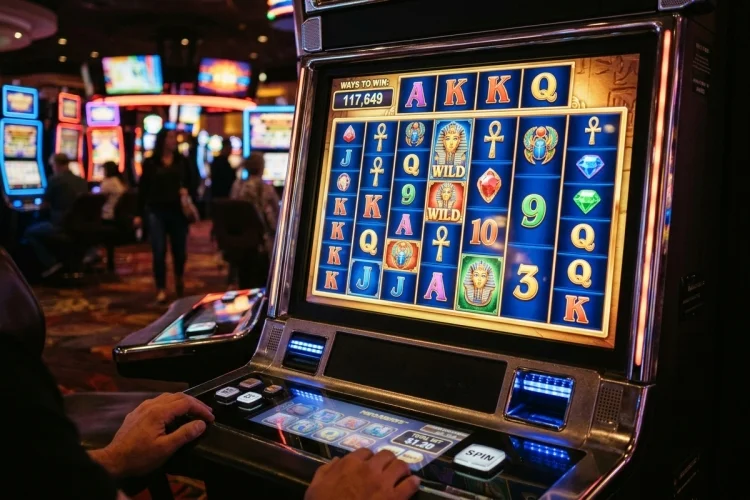
Evolution, which owns Big Time Gaming, explains that classic Megaways mechanics can display between two and seven symbols on each reel. With six reels showing seven symbols each, the game can reach 117,649 possible ways to win.

That number comes from multiplying the reel possibilities:

7 × 7 × 7 × 7 × 7 × 7 = 117,649.

The exact configuration can vary between individual games, so not every Megaways title uses exactly the same layout.

How Dynamic Reels Change Every Spin

Imagine a six-reel slot.

On one spin, the reels might display 3, 4, 5, 3, 6, and 4 symbols. On the next spin, those reel heights could change again.

As the number of visible symbols changes, the number of possible winning ways changes too.

This is the main difference between Megaways and a conventional fixed-reel slot. Instead of knowing that every spin has exactly 20 paylines or 243 ways to win, the available combinations can expand or contract with each result.

That changing structure creates much of the mechanic’s visual variety.

How Ways to Win Are Calculated

Megaways games generally use a ways-to-win system rather than traditional fixed paylines.

A common structure requires matching symbols to appear on consecutive reels starting from the left. Their exact vertical position may not matter.

Suppose reels one through three contain two, three, and four matching symbols.

That could produce:

2 × 3 × 4 = 24 combinations.

More matching symbols across more reels can create many additional combinations.

Big Time Gaming’s Monopoly Megaways, for example, uses up to 117,649 ways to win.

The system can initially look complicated, but the game software performs the calculations automatically.

Why Tumble Features Often Appear in Megaways Slots

Megaways and tumbling reels are seperate mechanics, but developers frequently combine them.

With a tumble feature, symbols involved in a winning combination disappear. Replacement symbols then fall into the empty spaces.

If the new arrangement creates another qualifying combination, another tumble can occur.

Pragmatic Play’s Money Stacks Megaways combines up to 117,649 ways to win with tumbling reels, showing how naturally the two systems work together.

Tumbles add another layer of movement because one paid spin can potentially produce several consecutive symbol arrangements.

However, not every Megaways game must use identical tumble rules.

Multipliers Can Make Tumbles More Complex

Many Megaways titles connect consecutive wins with multipliers.

A multiplier might start at 1x and increase after each successful tumble. If another combination appears before the sequence ends, the new win may receive the larger multiplier.

Money Stacks Megaways, for example, increases its total win multiplier with tumbling wins during one of its bonus features.

Other games handle multipliers differently. Some add multiplier symbols together, while others only activate enhanced multipliers during free spins.

This is why the paytable matters. Two games carrying the Megaways name can still have very diffrent bonus systems.

Why 117,649 Is Common but Not a Universal Limit

The number 117,649 is strongly associated with Megaways because it represents six reels with up to seven positions on each reel.

But developers have expanded the concept.

Pragmatic Play’s Great Rhino Megaways, for example, advertises more than 200,000 ways to win, while Big Time Gaming’s Gold Megaways can reach up to one million ways during its feature.

So Megaways should not simply be defined as “a 117,649-ways slot.”

The more important idea is the dynamic reel system that changes the number of available combinations.

How Free Spins Work in Megaways Games

Free-spin rounds often take the core reel system and add another mechanic.

A bonus might introduce increasing multipliers, extra wilds, guaranteed minimum reel heights, or additional free spins.

Big Time Gaming’s Max Megaways includes several possible free-spin modifiers, while its main six-reel layout provides up to 117,649 ways.

Pragmatic Play titles also frequently combine Megaways with tumbling wins and growing multipliers during bonus rounds.

The exact rules vary significantly, so understanding one Megaways game does not mean you automatically understand another.

Always check how the bonus is triggered and what actually changes once it begins.

Does More Megaways Mean Better Odds?

Not necessarily.

Seeing 117,649 or even one million possible combinations sounds impressive, but the number of ways alone does not tell you whether a game has a better theoretical return.

Payout values, symbol frequncy, reel probabilities, bonus mechanics, and game mathematics all contribute to the final RTP.

The UK Gambling Commission explains that RTP is a long-term theoretical average measured across a significant amount of play, not the amount an individual should expect during one session.

A slot with thousands of possible winning ways can still be highly volatile.

Megaways Games Can Have Different Volatility

Megaways does not automatically mean one specific volatility level.

For example, Evolution lists Monopoly Megaways as high volatility with a 96.50% RTP, while Max Megaways is also categorized as high volatility and lists a 96.37% RTP.

Another Megaways title can use different values.

Volatility broadly relates to how payouts may be distributed, while Megaways describes the dynamic reel mechanic.

They are related parts of the overall game design, but they should not be treated as the same concept.

Why Beginners Should Read the Paytable

The Megaways label tells you how part of the slot works, but it does not explain everything.

Before playing, check how many matching symbols are required, whether wins must start from the left, what tumble rules apply, and whether multipliers reset between spins.

You should also check RTP information, betting range, bonus conditions, volatility where provided, and maximum payout rules.

Do not assume that two Megaways titles from different studios behave mechanicly the same way simply because they share the licensed system.

Understanding What Is a Megaways Slot starts with dynamic reels and changing ways to win. Reel heights can vary from spin to spin, while tumbling symbols, multipliers, and free-spin features often add extra layers.

Before trying any Megaways game, open its paytable and check the exact reel structure, payout rules, RTP, and bonus mechanics rather than judging it by the headline number of ways.

What to Know Before Playing at an Online Casino

What to Know Before Playing at an Online Casino

Online casinos can look incredibly simple from the outside. Create an account, make a deposit, choose a game, and start playing. In reality, there are several details worth checking before real money ever enters the picture.

Before Playing at an Online Casino, it helps to understand licensing, withdrawal rules, bonus conditions, payment options, and responsible gambling tools.

These factors may not make the games easier to win, but they can help you understand how the platform operates, what rules apply, and what risks you are accepting.

Check Whether Online Gambling Is Legal Where You Live

The first step is not choosing a game or searching for a welcome bonus. It is checking whether online gambling is legally available in your jurisdiction and whether you meet the applicable minimum age.

Rules differ significantly between countries and even between regions within the same country. A website being accessible from your device does not automatically mean it is legally authorised to offer gambling where you live.

You should also avoid assuming that an international licence automatically gives an operator permission to serve every market. Regulatory approval usually applies within particular jurisdictions or under specific conditions.

Starting with the legal situation can prevent much bigger problems later.

Look for a Verifiable Gambling Licence

A licence is one of the most important things to check before creating an account.

Regulated operators are generally required to follow rules covering areas such as player protection, fair terms, age verification, complaints, and responsible gambling.

For example, the UK Gambling Commission recommends checking its public register before gambling with an operator serving Great Britain.

Malta Gaming Authority-licensed websites are also required to display licence information and responsible gaming information on their websites.

Do not rely only on a licence logo in the footer. Look for the licence number or operator name and verify it directly through the relevant regulator.

A copied logo can look convincing, while an official regulator database provides a more reliable comparision.

Read the Bonus Terms Before Accepting Anything

A large welcome bonus can sound attractive, but the headline amount tells only part of the story.

Bonus funds may come with wagering requirements, qualifying games, maximum stakes, expiration periods, or other restrictions.

The UK Gambling Commission describes wagering requirements as conditions requiring a player to wager a certain total value before specific bonus-related funds become withdrawable.

Imagine receiving a $100 bonus with a 30x wagering requirement based on the bonus amount. That could mean $3,000 of qualifying wagers must be completed before the bonus conditions are satisfied.

That does not automatically make the offer bad, but it shows why the terms matter more than the promotional banner.

Pay particular attention to restricted games and maximum bet rules. Some games may contribute differently toward wagering requirements, so never assume every wager counts in the same way.

Understand Deposits and Withdrawals

Depositing money usually takes seconds. Withdrawals can involve more steps.

Before depositing, check which payment methods are available, whether withdrawal fees apply, expected processing procedures, minimum withdrawal amounts, and whether the same payment method must be used for deposits and withdrawals.

Verification can also be part of the process. In Great Britain’s regulated market, online gambling operators are required to verify identifying information before allowing customers to gamble, and players should be told what documents may be required.

You may need identification, proof of address, or additional information depending on the operator and regulatory requirements.

Completing these checks early can reduce confusion if you later request a withdrawal. Never send sensitive documents through unofficial email addresses or messaging accounts.

Learn the Difference Between RTP and Guaranteed Returns

Return to Player, usually shortened to RTP, is commonly displayed for casino games, especially slots.

If a game has a theoretical RTP of 96%, that does not mean you will recieve $96 after wagering $100 during one session.

RTP describes a long-term statistical calculation across a very large number of plays. The UK Gambling Commission specifically notes that an RTP percentage should not be interpreted as the amount a player can expect back from each individual session.

Short-term results can be far above or below that percentage.

This distinction is important because casino games involve variance. Even two people playing the same game for the same amount of time can experience completely different outcomes.

Check the Games and Their Rules

Never assume you know a game simply because you recognise its name.

Two slot games can have completely different volatility, paylines, bonus mechanics, or payout structures. Blackjack tables may use different rules for doubling, splitting, dealer actions, or side bets.

Open the game information screen and look at the paytable before wagering.

For slots, pay attention to paylines or ways to win, symbol values, wilds, scatters, bonus triggers, and how multipliers work. For table games, check the betting limits and rules carefully.

Game knowledge cannot remove the house advantage, but it helps prevent avoidable misunderstandings.

Use Responsible Gambling Tools Early

Responsible gambling tools should not be treated as something only needed after a problem develops.

Deposit limits, time limits, reality checks, cooling-off periods, and self-exclusion can all help place boundaries around gambling activity.

Malta Gaming Authority regulations, for example, require licensed operators to provide player-protection measures including self-exclusion and gambling limits.

It can be useful to set a budget before the first deposit rather than deciding how much to spend during a session.

Casino gambling should be funded only with money that is genuinely disposable. Money intended for rent, food, debt payments, savings, or other important expenses should remain seperate.

Chasing losses is especially risky because increasing wagers does not change the probability of previous losses being recovered.

Know How Complaints Are Handled

Customer service is easy to ignore until something goes wrong.

Before depositing, find the casino’s complaints policy and check whether an independent dispute-resolution process exists. In Great Britain, licensed businesses must have complaints procedures and arrangements for referring unresolved complaints to approved alternative dispute resolution providers.

Keep records of deposits, withdrawals, bonus terms, and important customer-support conversations.

Screenshots can also be useful if terms change or a transaction becomes disputed.

A transparant complaint process is generally more reassuring than a platform that provides only a generic contact form with little information about escalation.

Playing at an Online Casino involves more than selecting a game and making a deposit. Check local legality, verify the licence, understand bonus and withdrawal conditions, learn how RTP works, and set clear spending limits.

Before wagering real money, take a few minutes to read the operator’s terms and game rules so you know exactly what you are agreeing to.

Common Myths About Online Slot Games You Should Stop Believing

Common Myths About Online Slot Games You Should Stop Believing

Online slots are easy to play, but the technology and mathematics behind them are often misunderstood.

When players experience a long losing sequence, a sudden bonus, or several similar results, they may begin searching for patterns that do not actually exist.

This is how common myths about online slot games spread. Some players believe a machine becomes “hot” after paying a large prize.

Others think certain hours offer better outcomes, increasing a wager improves the chance of winning, or a near miss means a jackpot is about to appear.

These ideas can feel convincing because people naturally try to identify patterns. However, regulated online slots normally use random number generators, mathematical paytables, and predefined game rules.

Individual results are not supposed to change because of a player’s recent wins, losses, balance, or session length.

Understanding the facts does not remove gambling risk, but it can help players make more informed decisions and avoid strategies based on false assumptions.

Myth 1: A Slot Becomes Due After Many Losses

A common belief is that a long series of unsuccessful spins must eventually be followed by a large win. Players may continue wagering because they think the game has collected enough money and is ready to pay.

In a properly regulated random slot, each spin is determined independently according to the game’s approved rules. Previous losses do not create a debt that the software must repay during the next round.

UK Gambling Commission standards prohibit adaptive behavior that changes the probability of outcomes according to earlier payouts or money taken.

A game can produce ten losses followed by another loss without violating randomness. Stopping because the planned budget has been reached is more sensible than waiting for an imaginary guaranteed payout.

Myth 2: Slots Are Hotter at Certain Times

Some players claim that slots pay more during weekends, late at night, or when fewer people are online. Others believe casinos increase payouts during busy periods to create excitement.

The time of day does not automatically affect an RNG-based outcome. A compliant random number generator should produce unpredictable results without favoring a particular hour, player, or session.

Independent laboratories test RNG systems to identify predictability and unacceptable bias. GLI states that RNG evaluation is intended to confirm that certain outcomes are not unfairly favored.

A promotion may be available only at a certain time, but that does not necessarily change the mathematical probability of the underlying slot.

Myth 3: A Near Miss Means a Win Is Close

When two jackpot symbols appear and the third lands just outside the payline, the result can feel as though the player almost won. This impression may encourage another spin.

Mathematically, however, a near miss is still a loss. It does not provide evidence that the next result will contain the missing symbol.

Research has examined how near-miss outcomes can influence motivation and emotional responses, even though they do not represent partial jackpot success.

Players should judge the result by the amount returned to the balance, not by how close the symbols appear to a winning arrangement.

Myth 4: RTP Predicts a Short Session

A slot displaying a 96% return to player does not promise to return $96 from every $100 wagered by one person. RTP is a theoretical percentage calculated across a very large number of rounds.

Actual results during a short session can be significantly higher or lower. The UK Gambling Commission distinguishes theoretical RTP from the return achieved during operational play.

Independent laboratories may use mathematical analysis and large simulations to determine whether a stated theoretical return is achievable over time.

RTP is useful for comparing long-term game design, but it should never be treated as a personal repayment schedule.

Myth 5: Increasing the Stake Always Improves the Odds

A larger wager normally increases the amount of money at risk and the size of possible proportional prizes. It does not automatically make the RNG more likely to produce a winning symbol combination.

Some games include rules under which a particular jackpot or feature requires a minimum qualifying stake. When this applies, it should be explained in the paytable.

Outside such specific rules, raising the bet does not create a general mathematical advantage. A player wagering $5 instead of $1 can lose money five times faster when the probabilities remain proportional.

Always check the game information rather than assuming that maximum-bet play receives special treatment.

Myth 6: Pressing Stop Changes the Outcome

Some slot interfaces allow players to shorten reel animations. This can create the impression that timing the button correctly determines where the symbols land.

In many digital games, the server or software has already selected the result before the visual reels finish moving. The animation presents the outcome rather than creating it.

UK regulatory changes prohibited slot features that speed up play or create an illusion of control over the outcome.

Pressing a button may affect how quickly the result is displayed, but it should not be confused with skillfully stopping a physical object.

Myth 7: Casinos Can Change Every Result After You Win

Players sometimes believe that an operator can immediately reduce a game’s winning probability after a successful session.

In regulated markets, automatic or manual intervention that changes outcome probabilities during play is prohibited under relevant technical standards.

This does not mean every online website is trustworthy. Unlicensed platforms may not follow recognized testing or regulatory requirements.

Choose casinos whose licenses can be verified through an official regulator. Games should come from identifiable providers and provide accessible rules, RTP details, and testing information.

Suspicion should lead to independent verification, not attempts to recover money through larger wagers.

The most common myths about online slot games are built around the idea that past events can predict or control future random outcomes.

Losing streaks do not make a game due, near misses are not partial wins, and specific playing times do not automatically improve the odds.

RTP describes long-term mathematical design rather than an individual session. Higher stakes increase financial exposure, while reel-stop buttons usually affect presentation rather than the selected result.

Before playing, read the paytable, confirm the published RTP, and use only legal, regulated platforms. Set a fixed entertainment budget and stop when it is reached.

The best response to slot myths is not finding a secret system – it is understanding randomness and keeping every session controlled.