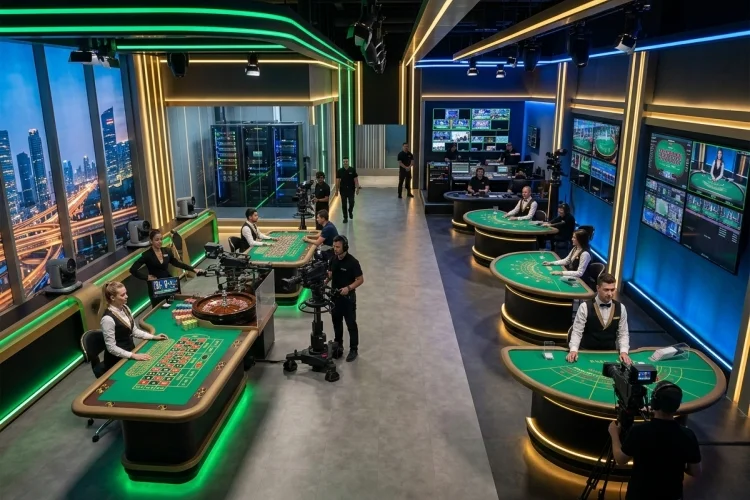
A live casino studio can look impressive at first glance, but attractive tables and bright lighting do not automatically create a high-quality gaming experience.
Behind every live blackjack hand or roulette spin is a combination of trained employees, physical equipment, streaming technology, software, security controls, and operational procedures.
Understanding what makes a good live casino studio helps players evaluate more than visual presentation.
A dependable facility should broadcast games clearly, record results accurately, protect game integrity, and keep the betting interface synchronized with the dealer’s actions.
It should also provide transparent rules and handle technical interruptions fairly. Regulators and independent laboratories assess live dealer operations differently from conventional digital games.
Their reviews may cover studio premises, employees, equipment, technical systems, result capture, and synchronization between physical play and the online interface. ture, and synchronization between physical play and the online interface.
A strong studio therefore combines entertainment quality with fairness, reliability, and professional management.
Professional and Well-Trained Dealers
The dealer is the most visible part of a live casino experience. A good presenter must understand the game, follow procedures accurately, communicate clearly, and remain professional during long or busy sessions.
Technical knowledge is only one requirement. Live dealers also perform an on-camera role, so they should appear confident, approachable, and comfortable speaking to an online audience. ve game presenters as on-air talent whose personality contributes directly to the product.
Training should cover dealing procedures, equipment use, customer communication, error reporting, responsible conduct, and unusual situations. Supervisors should also monitor tables and provide support when a mistake or dispute occurs.
A dealer should never rush a result, ignore visible equipment problems, or provide misleading information about the likelihood of winning.
Clear Video and Audio Quality
A good live casino studio needs a stable video stream that allows players to follow every important action. Cards, roulette results, betting areas, and dealer movements should remain visible from suitable camera angles.
High resolution is useful, but clarity matters more than visual decoration. Players should be able to read cards and recognize results without relying entirely on the digital overlay.
Audio should also be clear and synchronized. Dealer instructions, game announcements, and closing-bet messages need to arrive at the correct time.
Providers such as Playtech promote purpose-built live studios serving several interrating how production facilities have become a central part of modern live casino services.
Players with slower connections should ideally be able to reduce video quality without losing access to essential game information.
Accurate Synchronization and Result Capture
A live casino game combines a physical event with a digital betting system. The provider must ensure that the result shown in the interface matches what happened at the table.
For example, a roulette result may be captured through sensors, optical recognition, or manual confirmation. Card values may be read by specialized equipment before being transmitted to the player’s screen.
The betting window must close before the outcome becomes known. Any delay between the video, timer, and wagering system could create confusion or an unfair opportunity.
GLI’s live dealer evaluations specificalland technical testing alongside assessments of staffing, premises, and operational systems.
Reliable synchronization creates confidence because players can connect the accepted wager, visible action, and final settlement in one understandable sequence.
Commercial-Quality Equipment and Secure Premises
Live casino studios should use properly maintained cards, shoes, roulette wheels, tables, and other equipment. The UK Gambling Commission’s guidance use commercial casino-quality equipment and adequately trained croupiers.
Physical security is equally important. Access to tables, equipment storage, control rooms, and technical areas should be restricted to authorized employees.
Cards and other gaming materials require controlled handling. A studio should document when equipment is introduced, inspected, replaced, or removed from use.
Surveillance systems help supervisors review unusual events and investigate disputes. The facility must also be independently auditable, meaning reliable records should exist for relevant rounds and operational decisions.
A visually attractive studio is valuable, but secure procedures are what protect the integrity of the game.
Reliable Game Variety and Table Availability
A strong studio should provide more than one version of a popular table game. Different players may need low-limit tables, premium rooms, local-language dealers, or variations with specific side bets.
Availability is important because a large advertised catalog has little value when most tables are closed during the player’s normal hours. Well-managed studios schedule enough employees and tables to serve demand across relevant time zones.
Traditional blackjack, roulette, baccarat, and poker variants can be supplemented by game shows or hybrid formats. However, added entertainment should not make the rules difficult to understand.
Each table should display its betting range, game rules, payout information, language, and availability clearly. Players should know exactly which version they are joining before wagering.
Fair Handling of Interruptions
Live streams can fail because of internet problems, platform errors, power issues, or studio equipment faults. A good provider prepares for these situations before they happen.
The physical round may continue even when one player loses the video connection. The system must retain an accurate record of accepted wagers and settle them according to the confirmed result.
The UK Gambling Commission states thashould be fair, clearly communicated, and should not systematically disadvantage customers.
Studios should have backup equipment, escalation procedures, and technical teams capable of responding quickly. When a table must close, players should receive a clear message rather than being left with an unexplained frozen screen.
Player-Friendly Design and Responsible Features
Live casino software should make balances, wagers, results, and table rules easy to see. A professional video production cannot compensate for a confusing interface.
Betting controls should respond quickly and show whether a wager has been accepted. Players also need sufficient time to understand the available options before betting closes.
Account-level protections such as spending limits, time reminders, and self-exclusion are usually managed by the casino operator, but the live product should integrate witnical standards require facilities that help customers track the time they spend gambling.
A good studio supports informed decisions rather than using constant pressure, misleading celebration effects, or aggressive messages encouraging larger bets.
What makes a good live casino studio is the successful combination of professional dealers, dependable streaming, accurate synchronization, commercial-quality equipment, secure premises, varied tables, and fair interruption procedures.
Players should look beyond luxurious backgrounds and promotional claims. Check whether cards and results are clearly visible, whether table information is transparent, and whether the studio belongs to a recognized provider operating through a regulated casino.
Before joining a live table, review the rules, betting limits, and connection requirements. Choose licensed platforms, set firm financial and time limits, and treat live casino games as entertainment rather than a reliable way to earn money.